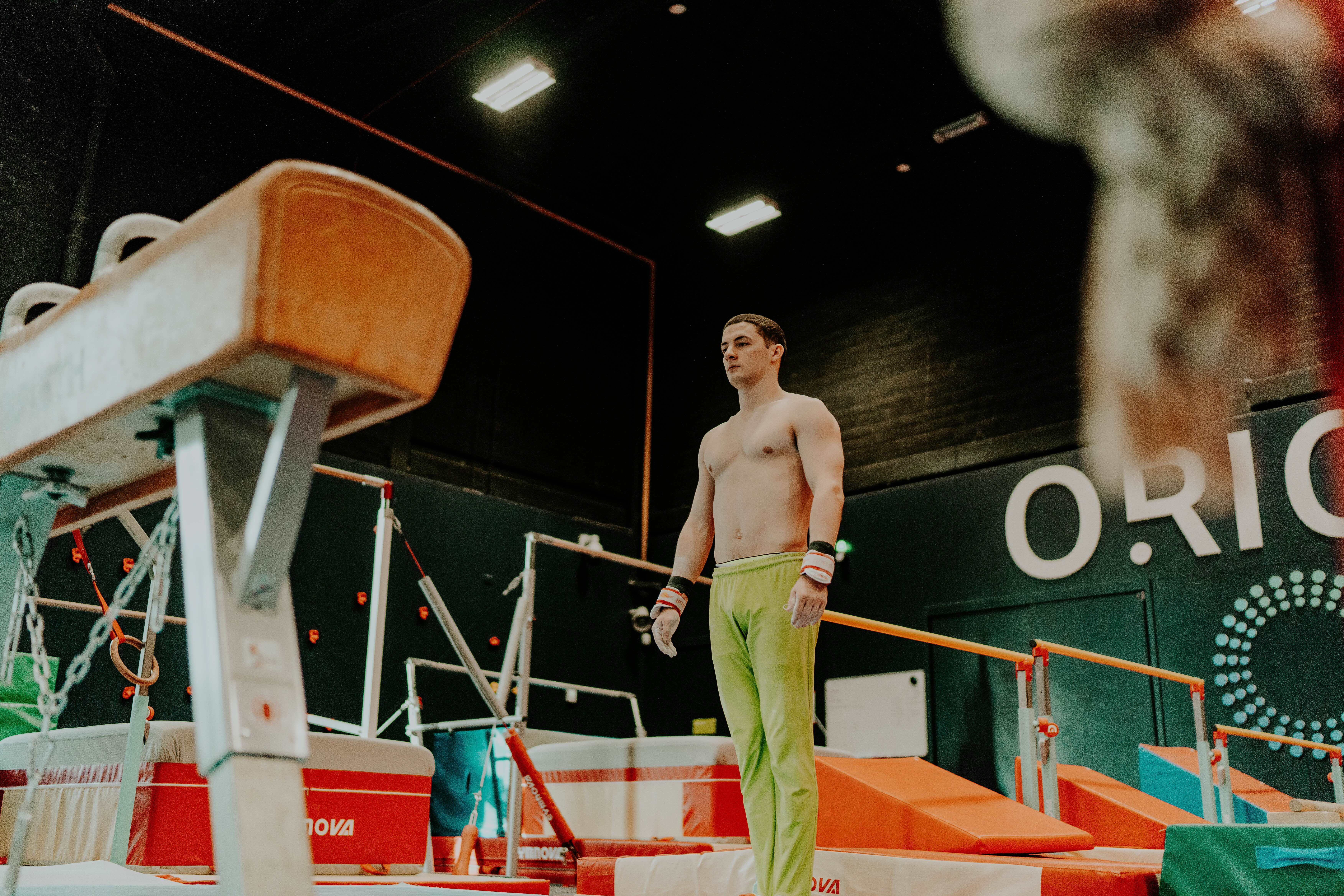
Antalya was an important marker in the process.
Winning gold at a World Cup is always significant, but this one carried more weight because of what it represents within the wider timeline. After the Olympic Games in Paris 2024, returning to competition is not just about results, it’s about re-establishing position, rhythm, and intent. This competition was a step in that direction, and in that sense, it did its job.
The result confirms that I am competitive at the top level again. It shows that the work done through injury, through uncertainty, and through the transition out of the Olympic cycle is moving in the right direction. A World Cup gold is not given, and it reflects a level of execution that is still world class.
At the same time, the performance itself was not at the level required to win Olympic gold.
That distinction matters.
It is possible for a routine to be good enough to win on a given day, in a given field, and still fall short of the standard required at the very highest level of the sport. This was one of those performances. It was strong, controlled, and competitive, but it was not the absolute level I know is necessary when everything is at its peak.
Recognizing that is important because it defines the direction of the work going forward.
If I were fully satisfied with that routine, then the ceiling would remain where it is now, and that is not high enough. There are athletes capable of exceeding that score, and in major competitions, that margin becomes decisive. Improvement has to be intentional, and it has to be continuous, even when the result suggests that what you are doing is already working.
At the same time, it would be equally inaccurate to dismiss the performance entirely.
There is value in acknowledging what it took to reach that point. The return to competition after injury is not linear, and maintaining a world-class level through that process requires consistency, patience, and discipline. The ability to step back into an international field and produce a routine that wins reflects those qualities, even if the routine itself is not yet at its maximum potential.
There is also a broader challenge that sits behind this phase.
Continuing to pursue improvement after achieving Olympic gold requires a clear decision. The external goal has already been reached, so the motivation has to come from a different place. It becomes less about proving something, and more about maintaining a standard and extending it further. That is a conscious choice, and Antalya is part of that continuation.
This result sits in the middle of that balance.
There is pride in returning and winning again at an international level. There is gratitude for the position I am in, to be able to compete, to perform, and to still be in contention for medals. At the same time, there is a clear understanding that the current level is not the final level.
That gap is where the focus remains.
The objective now is to close that gap, to take a performance that is already competitive and refine it into something that holds under the highest possible pressure, against the strongest possible field. That requires detail, consistency, and a willingness to keep pushing beyond what is currently enough.
Antalya was not the end point, and it was not intended to be.
It was confirmation that the process is working, and a reminder of what still needs to be built.
The direction is clear.